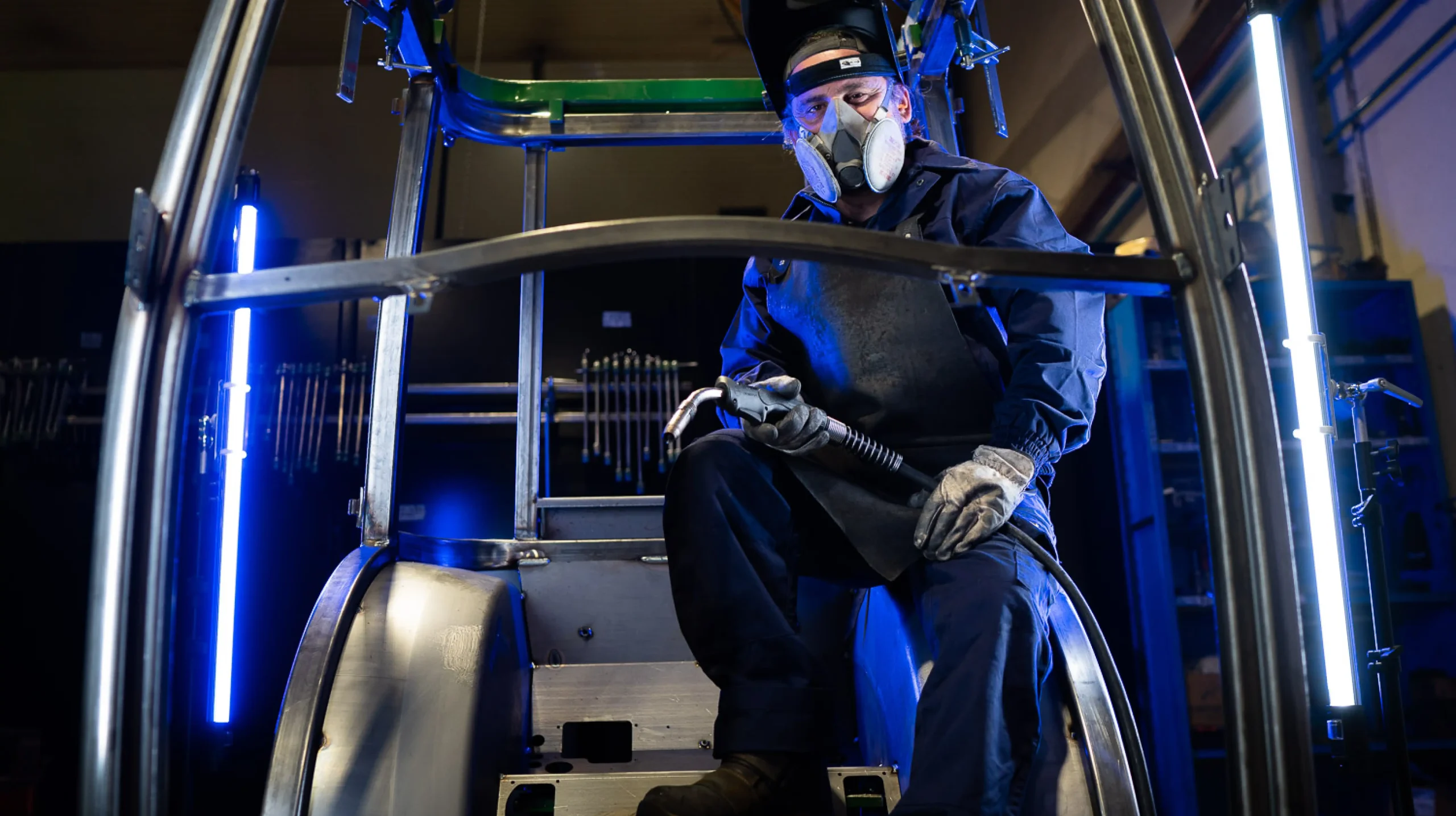
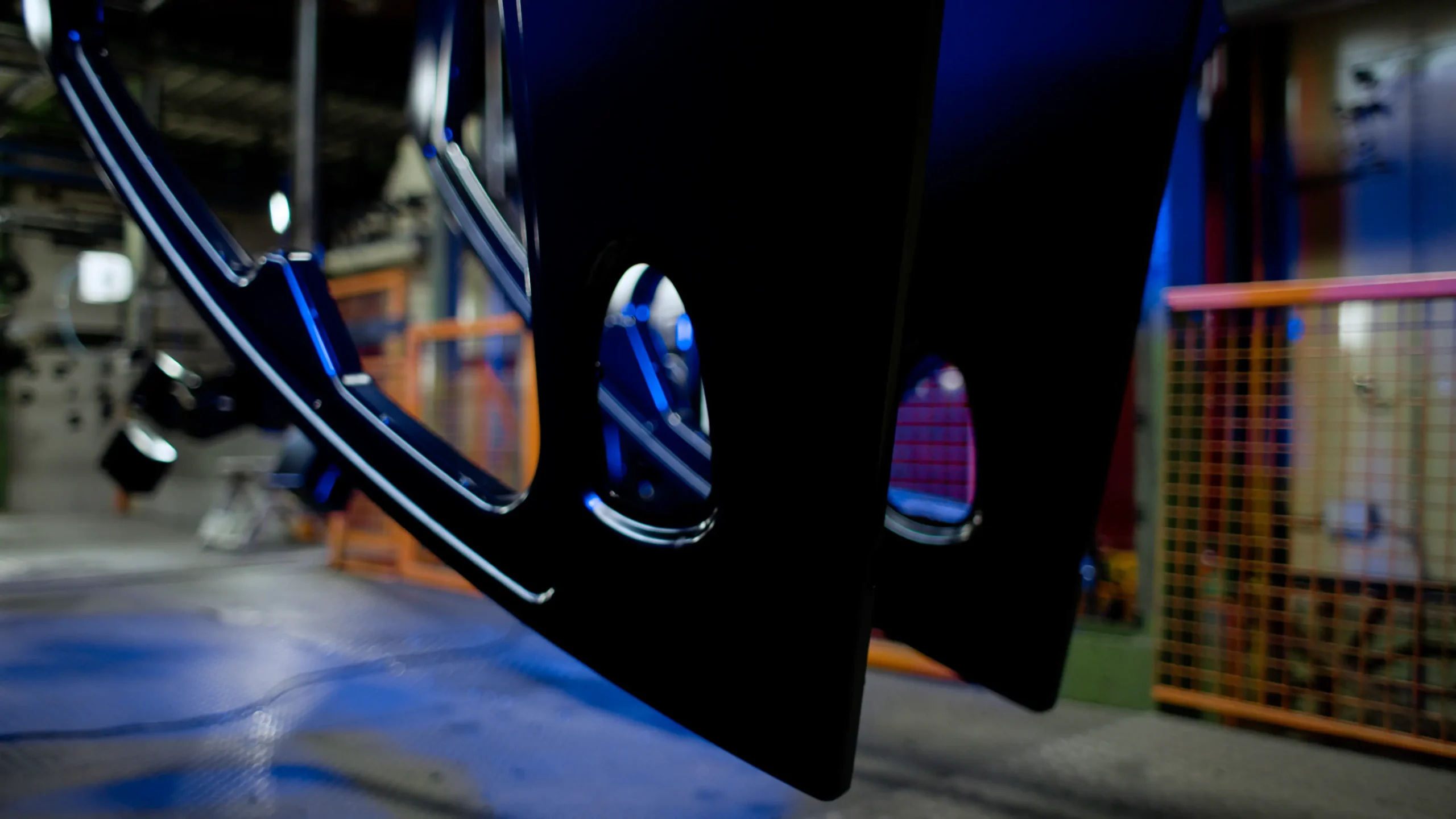
At Mansilla Cabs, we use a multi-stage cataphoresis (e-coat) process to protect every metal cab and component we manufacture. This surface treatment is vital to our cab manufacturing process, ensuring long-term corrosion resistance and uniform coating for all operator cabs and structural parts.
The process begins with a rigorous pretreatment phase, including degreasing, descaling, and a series of rinses to remove oils, oxides, and residues. We apply a tricationic microcrystalline phosphating treatment—one of the most advanced in the industry. This stage uses zinc, nickel, and manganese to create a strong, fine-grain phosphate layer that enhances adhesion and durability.
After thorough rinsing with demineralized water to remove any residual salts, the parts are immersed in a cataphoresis tank. A low-voltage electric current causes positively charged epoxy paint particles to bond to the negatively charged metal surface. This ensures full coverage, even in recessed or complex areas, making it ideal for industrial cabins and high-performance cab components.
The parts are then cured in a convection oven, locking in the coating and providing a tough, chemically resistant finish. This process is compatible with additional powder coatings and meets the highest automotive and industrial standards.