


Passing a ROPS or FOPS test is one of the most important milestones in validating the strength of a protective structure. However, the performance of that structure during testing begins long before the test itself, at the stage where the welding requirements are defined. When a cab or protective structure undergoes a ROPS or FOPS test, the final result is visible: the structure must absorb and transmit loads while maintaining the designated protective clearance zone.
This performance does not depend solely on geometry or steel thickness. It also relies on something far less visible: how the welded joints have been designed, qualified, executed, and controlled.
At Mansilla Cabs, we have been integrating the requirements of ISO 3834-2 into our welded fabrication processes for almost a decade, treating welding as a special process that must be controlled from the initial technical review through to the final inspection of the structure.
This involves the prior assessment of factors such as parent material, joint geometry and accessibility, edge preparation, welding sequence, welding positions, applicable regulatory requirements, and acceptance criteria.
From that point onward, production is supported by qualified welding procedures in accordance with ISO 15614-1 and ISO 15613, production Welding Procedure Specifications (WPSs), welders qualified under ISO 9606, and mechanized or automated welding operators qualified in accordance with ISO 14732.
Nevertheless, qualifying a welding procedure is only the starting point.
During manufacturing, we monitor variables that directly influence the performance and repeatability of the welded joint: welding parameters, welding sequences, weld dimensions, position, consumables, equipment condition, and execution conditions.
Acceptance criteria are established based on ISO 5817, with the required quality level determined according to the criticality of each welded joint.
Inspection is not limited to the end of the process. Our system includes controls before, during, and after welding, as well as material traceability and records that allow the product to be tracked from raw material receipt through to the finished structure.
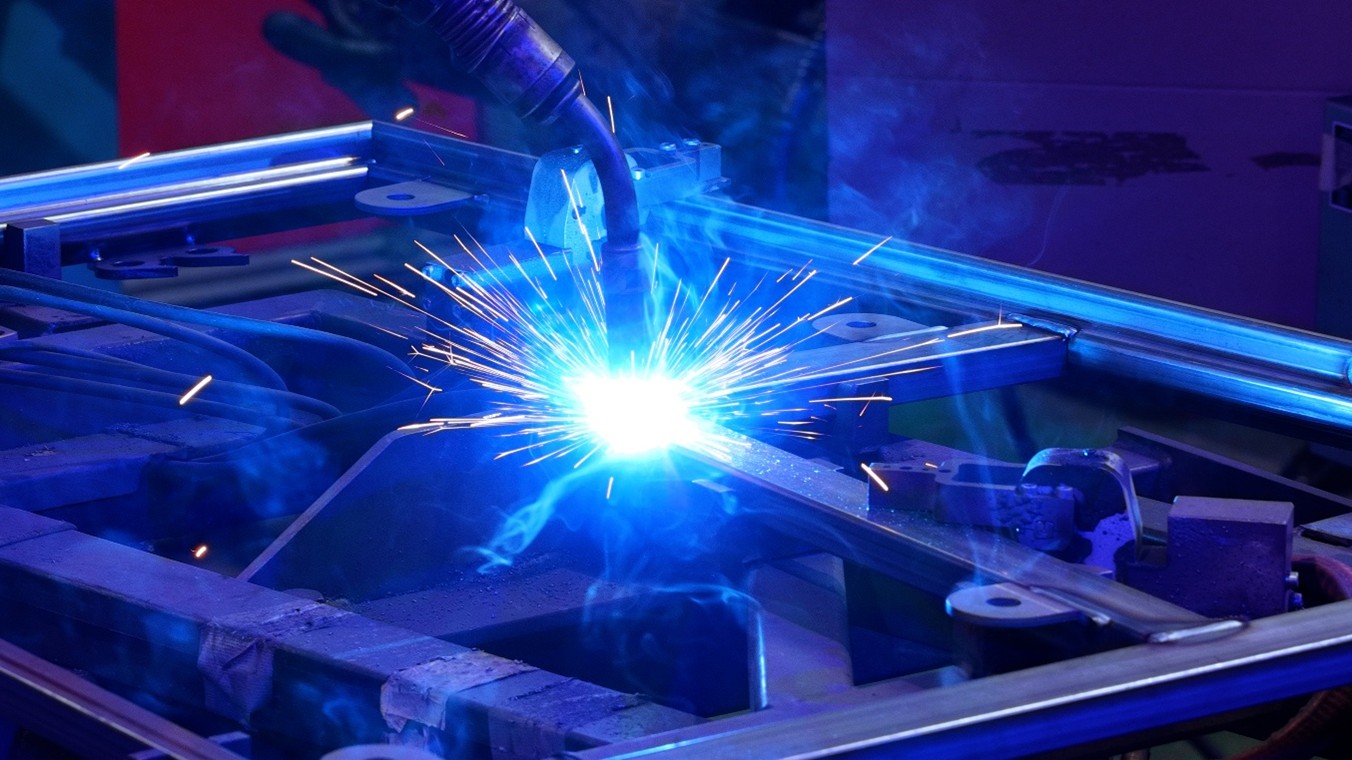
The same approach is applied to our robotic welding cells.
Automation provides process repeatability and stability, but it does not replace welding engineering. It still requires qualified procedures, defined parameters, controlled sequences, and specific inspection of automatically produced welds.
For this reason, when a structure is required to pass a ROPS or FOPS test, our work does not begin in the laboratory.
It begins much earlier.
Strength is engineered.
The joint is qualified.
The process is controlled.
Manufacturing is verified.
And the test confirms the result.
#MansillaCabs #WeldingEngineering #ISO3834 #ROPS #FOPS #WeldingQuality #RoboticWelding #Manufacturing #Engineering
